Wet Walls, Damp Carpet and a Musty Smell: What Mitigation Means
Most people do not search for mitigation. They search for a carpet that is soaking, a wall that feels cold and damp, a ceiling stain that is spreading or a smell that will not go away. All of those point to the same job, which is finding where the water went and drying it before it spoils more material.
Water mitigation is that job: locate the moisture, remove standing water, set up drying equipment and track the readings until the materials are dry. Rebuilding comes later under water damage repair.
When Water Damage Is an Emergency
Water is an emergency whenever it is still moving, has reached walls, ceilings or electrical areas, or has been sitting on carpet and wood long enough to swell it. Call at night, on weekends and on holidays, since the dispatch line is open around the clock and same-day response is offered when crews are available.
While you wait, close the nearest shut-off valve, keep power off in wet areas if you can reach the panel without standing in water, and move small items to a dry spot. If water is near a panel or outlets, or if you smell gas, leave and call 911 or the utility first. We never promise an arrival time, and we will not ask you to take a risk.
Stop the source
Close the fixture valve, the water heater valve or the main. Ask the city's Public Works line at (562) 804-1424 which water company owns your meter.
Protect what you can
Lift electronics, books and small furniture. Put foil or plastic under furniture legs on wet carpet.
Document before moving
Photos and short videos of every wet surface help your insurer and help the crew plan.
Keep people clear
Keep children and pets out of wet areas, and stay out of any room with water near outlets.
How Water Mitigation Works
A crew arrives with moisture meters, a thermal camera and extraction equipment. The first pass maps the wet area on every surface, because water travels under baseboards and through wall cavities to places that look dry. Standing water comes out with extraction units, and wet carpet pad is usually removed.
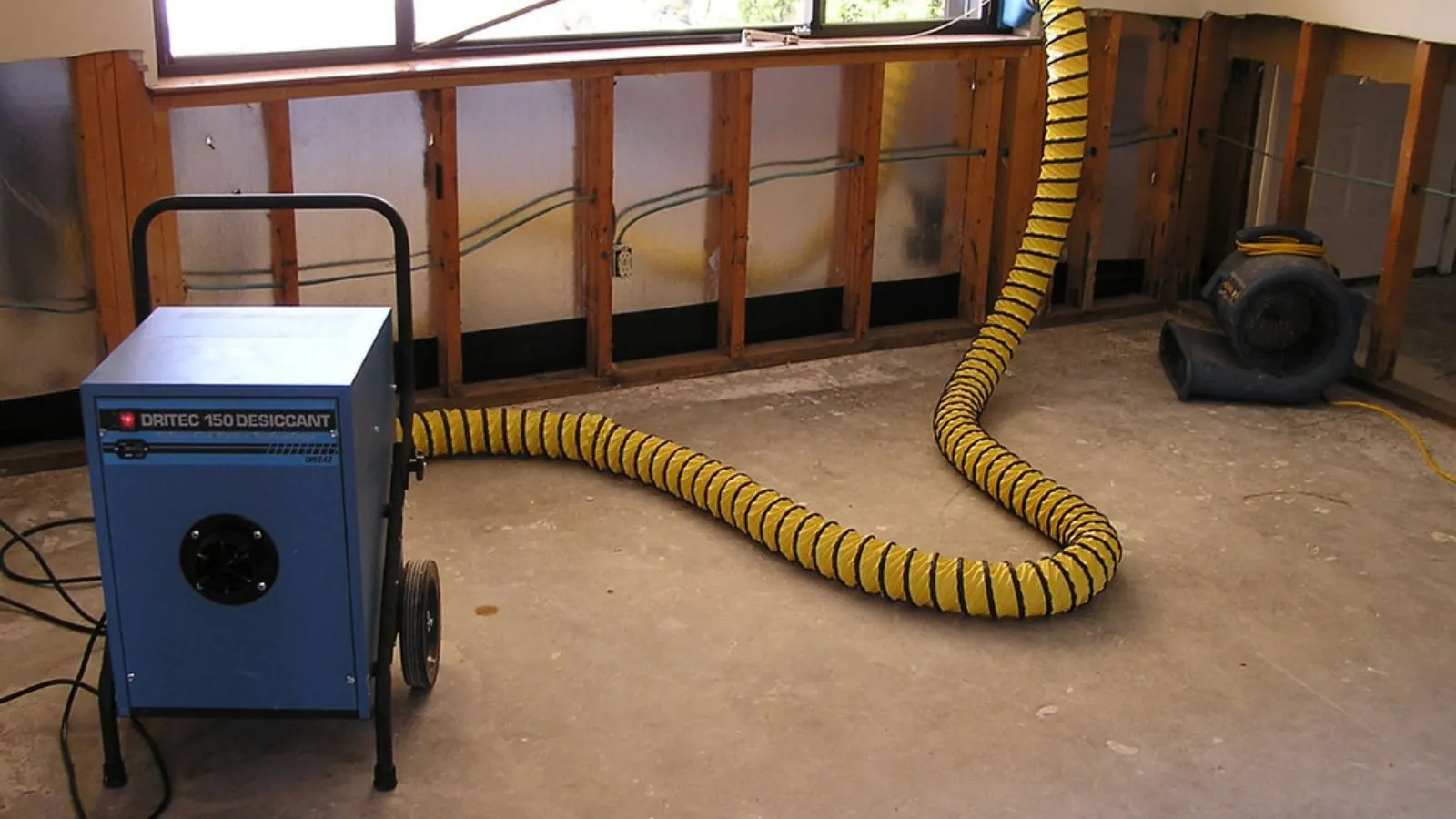
Air movers push dry air across wet materials while LGR dehumidifiers pull moisture out of the air. In some walls the crew drills small holes or opens a section so air can reach the cavity. Readings are logged on return visits until the materials reach their drying goal, which is how the job is judged finished.
Structural Drying
Structural drying is the part of mitigation that dries the building itself: studs, subfloor, drywall, insulation and concrete. Wood and drywall hold water differently, and so does a slab, so one room can need several equipment settings at once.
Drying is a balance of airflow, heat and humidity control. Too little airflow leaves pockets wet, and too much without dehumidification just moves moisture into other rooms. Crews follow the principles in the ANSI/IICRC S500 standard for water damage restoration, and homeowners should ask any company whether its crews work to it.
| Equipment | Job on site |
|---|---|
| Moisture meter | Reads moisture in drywall, wood and concrete so wet areas are not guessed. |
| Thermal camera | Shows temperature differences that can point to moisture behind surfaces. |
| Extraction unit | Pulls standing water and water saturated into carpet. |
| Air mover | Pushes air across wet surfaces to speed evaporation. |
| LGR dehumidifier | Removes moisture from the air so surfaces keep drying. |
Cost Factors for Water Mitigation
Four things move mitigation pricing most: the water category, the square footage that is wet, the materials involved and how many days of equipment the readings call for. Rebuilding is a separate scope.
Scope and price are explained before work starts. For a number that fits your situation, call and describe the damage.
About insurance
Sudden and accidental water damage is often covered by homeowners and renters policies, while gradual leaks often are not. Flood damage is usually excluded and needs separate flood coverage. Check your policy or ask your insurer. Moisture logs and photos from mitigation are the documents most claims ask for.
Water still spreading? Call now. The line is open all night, and a dispatcher will start with the steps that protect the most.
Water Mitigation FAQ
Yes. The dispatch line is open 24 hours a day, every day, and after-hours calls go through the same process as daytime calls. Same-day response is offered when crews are available, and no arrival time is promised.
It means stopping water damage from spreading. The crew finds wet materials, removes standing water and dries the structure so walls, floors and insulation can be saved where possible.
Drying time depends on materials, humidity and how deep the water went, so it is tracked by readings instead of a calendar. The number of air movers and dehumidifiers depends on the square footage and the wet materials. Ask the crew to explain the readings at each visit.
We do not offer equipment rental. Equipment placement and readings are the hard part, and a guess often leaves wet pockets behind, so a crew with a drying plan is the safer route after any real leak.
Yes. Mitigation stops the damage and dries the structure. Water damage cleanup removes ruined debris and sanitizes. Many jobs involve both, and each has its own scope.