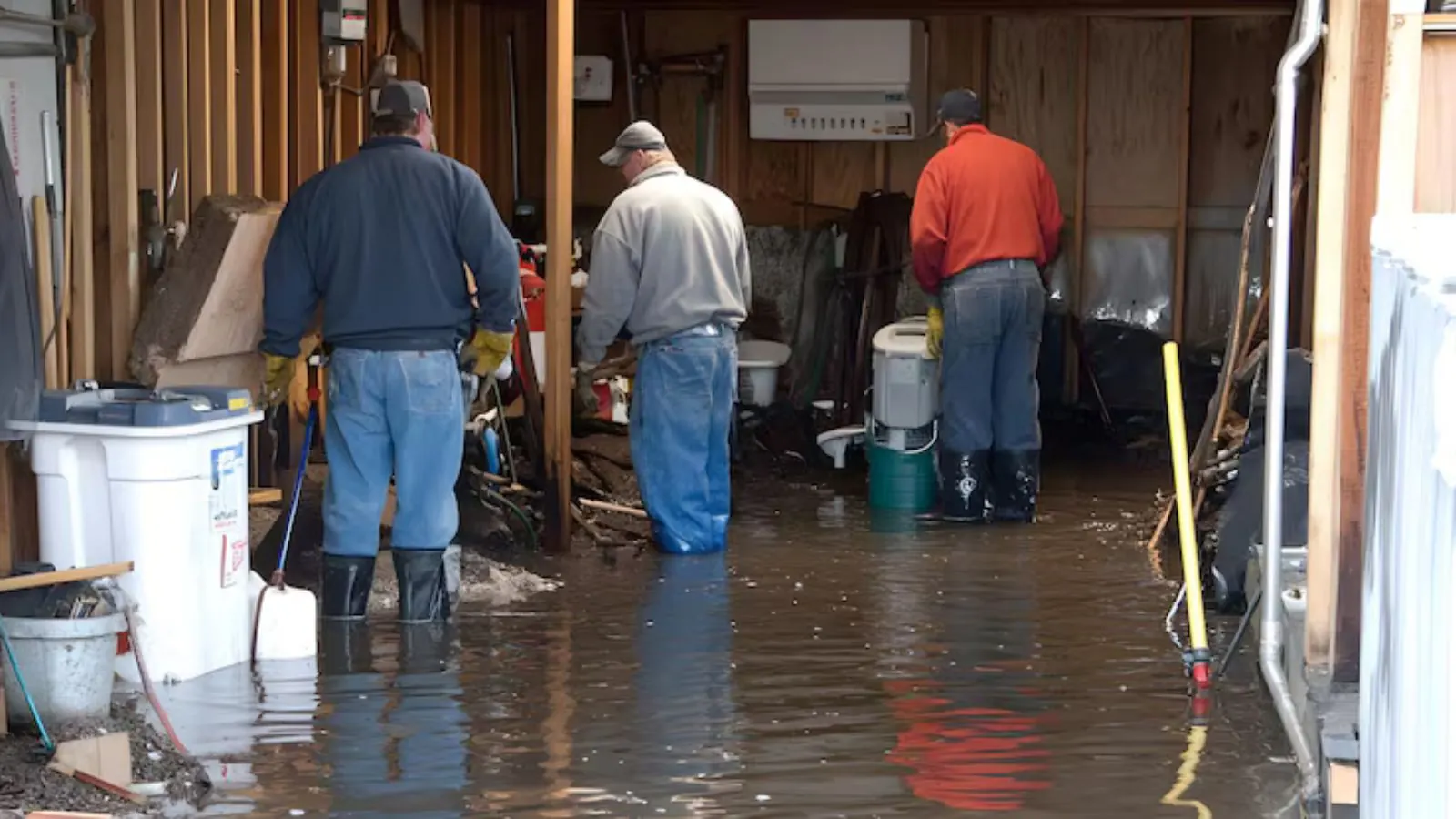
When Standing Water Is an Emergency
Standing water is an emergency when it is deeper than a spill, still running, near electrical outlets or an appliance, or sitting on carpet and wood. Each hour lets the water travel further into baseboards, wall cavities and the layer under the floor.
The dispatch line is open at night, on weekends and on holidays. Same-day response is offered when crews are available, and we do not promise an arrival time. While you wait, shut off the source, keep people and pets out and do not run a household vacuum on water.
Stay out if water touches the electrical system
If water is around a panel, outlets or a ceiling fixture that is dripping, stay out of the room and cut power only if you can reach the panel while standing on dry ground. Call the utility or 911 for any gas smell or sparking before you call us.
How Water Extraction Works
Crews start with submersible pumps when water is deep, then move to extraction units that pull water from carpet, pad and hard floors. Wands and weighted tools press water out of carpet. A truck-mounted unit is used where the job and the access allow.
Extraction removes most of the water quickly, but the structure remains damp. Moisture meters and a thermal camera show what is left in walls and under flooring, and drying follows under water mitigation.
Burst Pipe Water Damage
A burst pipe under a sink, behind a wall or in a ceiling can put water on a floor quickly. The first step is the shut-off, either at the fixture or at the main. In Bellflower, four different water companies serve different streets, so ask the city's Public Works line at (562) 804-1424 if you are not sure who owns your meter.
After the water is off, crews extract what is standing, find the wet cavity and open it enough for air to reach the framing. A pipe repair is a plumbing job, so the dispatcher will tell you when a plumber is needed. Insurers often ask for photos taken before anything is removed.
Garages, Crawl Spaces and Ground Floors
Water in a garage or crawl space often comes from irrigation backflow, a leaking water heater or a failed hose. Crawl spaces are slower to dry because air does not move well, and wet insulation there can stay wet for a long time.
Whole-house flooding from a failed supply line or a washing machine valve is treated like a large leak: extraction, a moisture map of every room and a drying plan. Large losses are discussed with your adjuster early, because mitigation done quickly keeps the claim from growing.
| Situation | Usual method |
|---|---|
| Deep water on a ground floor | Submersible pump, then extraction unit. |
| Soaked carpet and pad | Weighted extraction tools, pad removal. |
| Wet hard floor | Squeegee and extraction, then drying equipment. |
| Crawl space water | Pump, then drying with air movers and dehumidifiers. |
| Sewage involved | Stop, stay out, treat as Category 3 under flood damage restoration. |
Cost Factors
Pricing follows the depth and area of the water, the category, access to the space, whether drying equipment follows and how long it stays. A small kitchen spill and a flooded ground floor are very different jobs.
Scope and price are explained before work starts. Describe the situation on a call and the dispatcher will walk you through the factors.
Insurance note
Sudden and accidental events such as a burst pipe are often covered, while long-term leaks often are not. Check your policy or ask your insurer. Take photos before anything is moved and keep receipts for any temporary repairs.
Water on the floor right now? Call and a dispatcher will start with the steps that protect the most.
Drying plans on this site follow the ANSI/IICRC S500 standard for professional water damage restoration, which sorts water into categories and sets how wet materials are handled. This describes the published industry standard and not a certification claim, and homeowners can ask any company which standard its crews work to.
Water Removal FAQ
Yes. The line is open 24 hours a day, every day, including holidays. Same-day response is offered when crews are available, with no promised arrival time.
As fast as possible. Water spreads into baseboards, wall cavities and subfloors, and wet materials swell and stain. Carpet and wood suffer within days, and mold needs moisture to start.
Yes. Crews pump the water, check the insulation and subfloor for moisture and set drying equipment. If the source is irrigation or a plumbing line, that repair is a plumber's job.
Not necessarily. The fixture valve and the main inside your home are yours. The meter shut-off belongs to your water company, and Bellflower is served by four of them.
Stay out and call. Water from a toilet, drain or outdoors is treated as contaminated and needs protective gear and a different cleanup process.
No. Extraction takes out standing water, and drying is a separate step done with air movers and dehumidifiers.