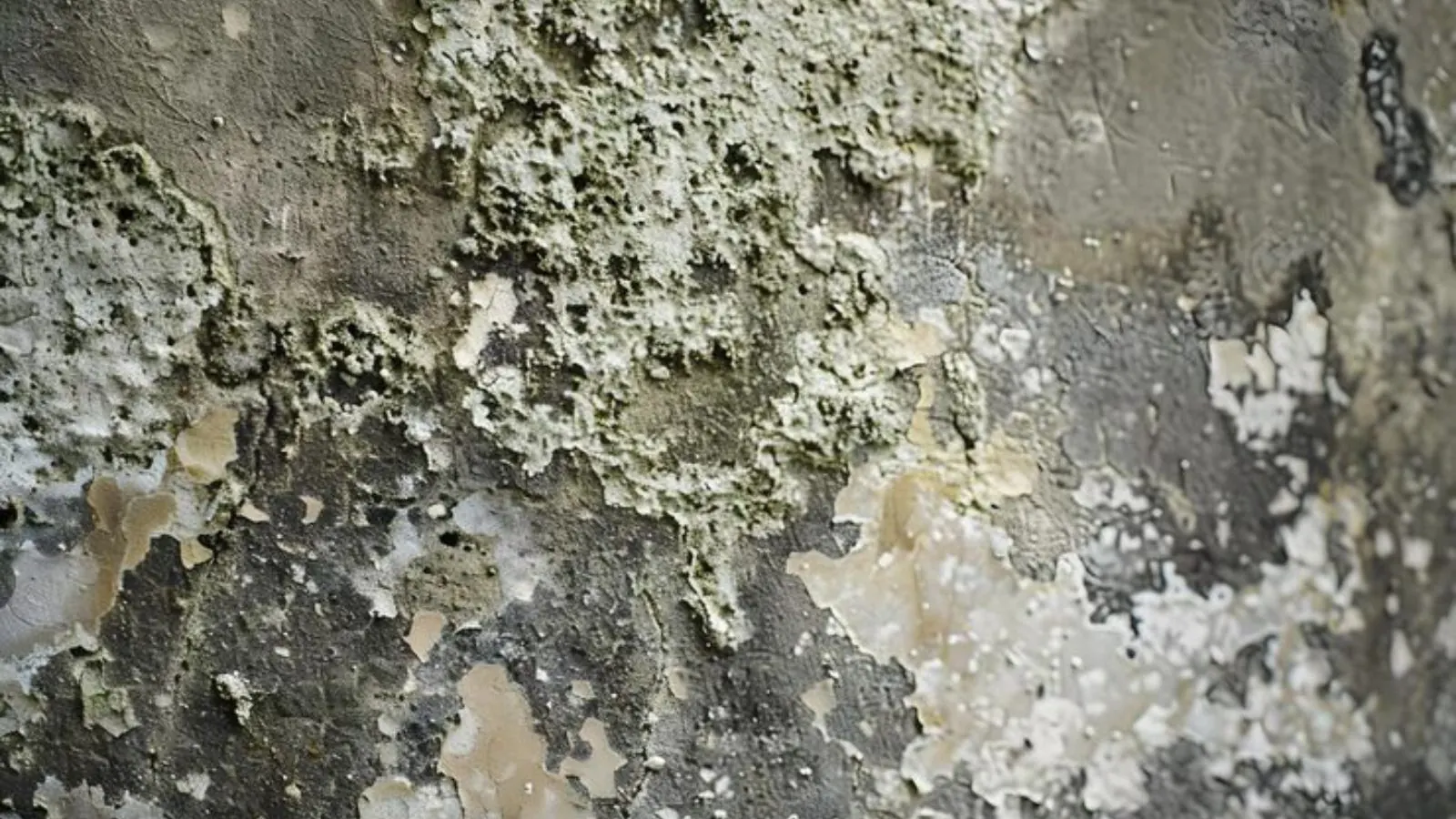
Common Appearances
| Appearance | Where it often shows up |
|---|---|
| Fuzzy or cottony patches | Walls, fabric, stored boxes. |
| Black or dark speckles | Bathroom ceilings, window frames, grout. |
| Green, blue or white powder | Wood, leather, food, damp storage. |
| Slimy or wet-looking streaks | Surfaces near constant moisture. |
| Orange or pink film | Showers and tile, often bacteria or yeast. |
Color does not tell you the species or how risky it is. Different molds can look alike, and one type can show several colors.
Look-Alikes
Dust, soot, cobwebs, dirt and mineral deposits can all resemble mold. Water stains are often a brown ring on a ceiling that dried in layers. Efflorescence on concrete is a white salt crust and not growth.
A simple clue is the cause. Mold needs moisture. If a spot is in a dry, clean area with no leak history, it is less likely to be mold, though a test or an expert look is the way to be sure.
Smell and Surroundings
A musty, earthy smell near a wall, in a closet or under a sink can point to growth you cannot see. Peeling or bubbling paint, warped baseboards and a damp feel in the air are other clues.
Think about history. A past leak, a roof issue, a plumbing repair or a spill that was never fully dried raises the odds that a mark is mold.
Where to Check After a Leak
- The back of a closet along an outside wall.
- Under sinks and behind the toilet.
- The ceiling below an upstairs bath.
- Carpet edges and under pad where flooring meets walls.
- The underside of stored boxes and furniture against walls.
What to Do If You See It
- Do not touch, brush or vacuum it, since that can spread spores.
- Photograph it with a coin or ruler for scale.
- Find and stop the moisture source.
- Keep the area closed off if possible.
- Call for an assessment, especially if it covers more than a small patch.
Small spots on tile or glass can often be cleaned with detergent. Growth on drywall, wood or carpet needs assessment, and mold remediation explains the next steps.
Mold You Cannot See
Growth can sit behind wallpaper, inside wall cavities and under flooring. Moisture meters and a thermal camera help find wet spots that might hide it. A small inspection hole can reveal conditions inside a wall.
We look for moisture first, since that is what we can measure. If a surface test or an air test is useful, we will say so and we will tell you to use an independent tester.
Questions About Health
We cannot answer questions about symptoms or risk. If you or someone in your home has health concerns, talk to a physician. What we can do is find the moisture and remove growth safely.
Mold on Different Surfaces
On drywall, mold often shows as spots that grow outward, sometimes with a fuzzy edge. On wood it can look like a stain that follows the grain. On fabric and leather it appears as powdery or fuzzy patches, and on tile grout it tends to be dark lines along the joints.
Behind wallpaper it may show as dark blotches that seep through. Under carpet you may see it on the back of the pad or the tack strip before it shows on top.
Mildew and Mold: Is There a Difference?
People use mildew for flat, powdery growth on surfaces and mold for thicker, fuzzier growth. Both are fungi and both need moisture. For practical purposes the response is the same: find the moisture, clean what you can safely and remove what is porous.
When a Photo Helps
If you call us, a few clear photos help. Take one wide shot of the room, one closer shot of the area and one close-up with a coin for scale. Add a note of when you first saw it and what water event came before, and we can tell you what to expect from an assessment.
Spots That Come Back After Cleaning
A mark that returns within weeks of cleaning is a strong sign that moisture remains. Check for condensation on cold walls, slow leaks and poor ventilation. A moisture reading is a better guide than a second round of scrubbing.
Safe Ways to Take a Closer Look
Use a flashlight to see into corners and a mirror to look behind objects. Do not cut into walls yourself unless you are prepared for what may be inside. Leave opening and containment to trained crews if the spot is on drywall.
Keeping a Simple Log
Write the date, the spot and a short description each time you check an area, and take a photo from the same angle. A log shows whether a mark is growing, fading or staying the same, and it gives a professional useful history when you call.
When in doubt, treat the spot as a moisture clue first. Finding and fixing the wet source is the step that makes every later decision easier.
Bellflower Local Note: Winter Is the Wet Season
NOAA's 1991 to 2020 normals for Long Beach Daugherty Field show about 12 inches of annual rain, with roughly 10.5 inches between November and March. A roof or window leak is most likely to show up in those months, so check ceilings and window sills after the first storms.
August averages just 0.01 inch, so a damp spot in late summer more likely points to plumbing, an AC line or humidity indoors. The same seasonal pattern holds in Downey and Paramount.
What Mold Looks Like FAQ
No. Soot, dirt and mineral stains look similar. Moisture history and a professional look help tell them apart.
Kits can show that spores exist, which is common indoors. They do not tell you how much, where it came from or what to do.
Surface cleaning does not remove growth that reaches into porous material, and it does not fix moisture.
That suggests a roof, window or exterior wall leak. Document the pattern and have the source found.
It is common on wet surfaces and usually cleaned or replaced. Persistent growth on walls or ceilings suggests poor ventilation.