Step One: Safety and the Source
The crew first checks for hazards, including electrical risk near water, slipping and structural concerns. They look for the source and confirm it has been stopped, since drying while water still flows is wasted effort.
If the water came from outside or from a drain, it is treated as contaminated. That changes protective gear, what gets removed and how surfaces are cleaned. See flood damage restoration for the contaminated water process.
Step Two: Extraction
Pumps and extractors remove standing water. Truck-mounted or portable units pull water from carpet and hard floors. Fast removal limits how much goes into the walls and subfloor.
See emergency water removal for how extraction is done. Hard floors may get squeegee and wet vacuum treatment, while carpet may be lifted and padding removed.
Step Three: Moisture Mapping
The team uses a moisture meter and often a thermal camera to find wet areas and mark the boundary. Readings are recorded by location, giving a baseline that drying must reduce.
This mapping also tells the crew what can stay and what must go. Items that read wet beyond practical drying are removed.
| Equipment | What it does |
|---|---|
| Air movers | Push air across wet surfaces to speed evaporation. |
| Dehumidifiers | Remove moisture from the air so it does not return to materials. |
| Drying mats or panels | Pull moisture out of hard floors. |
| Moisture meters | Measure how wet materials are. |
| Thermal camera | Shows temperature patterns that point to wet areas. |
| HEPA air scrubbers | Clean the air when dust or contaminants are a concern. |
Step Four: Setting Up and Monitoring
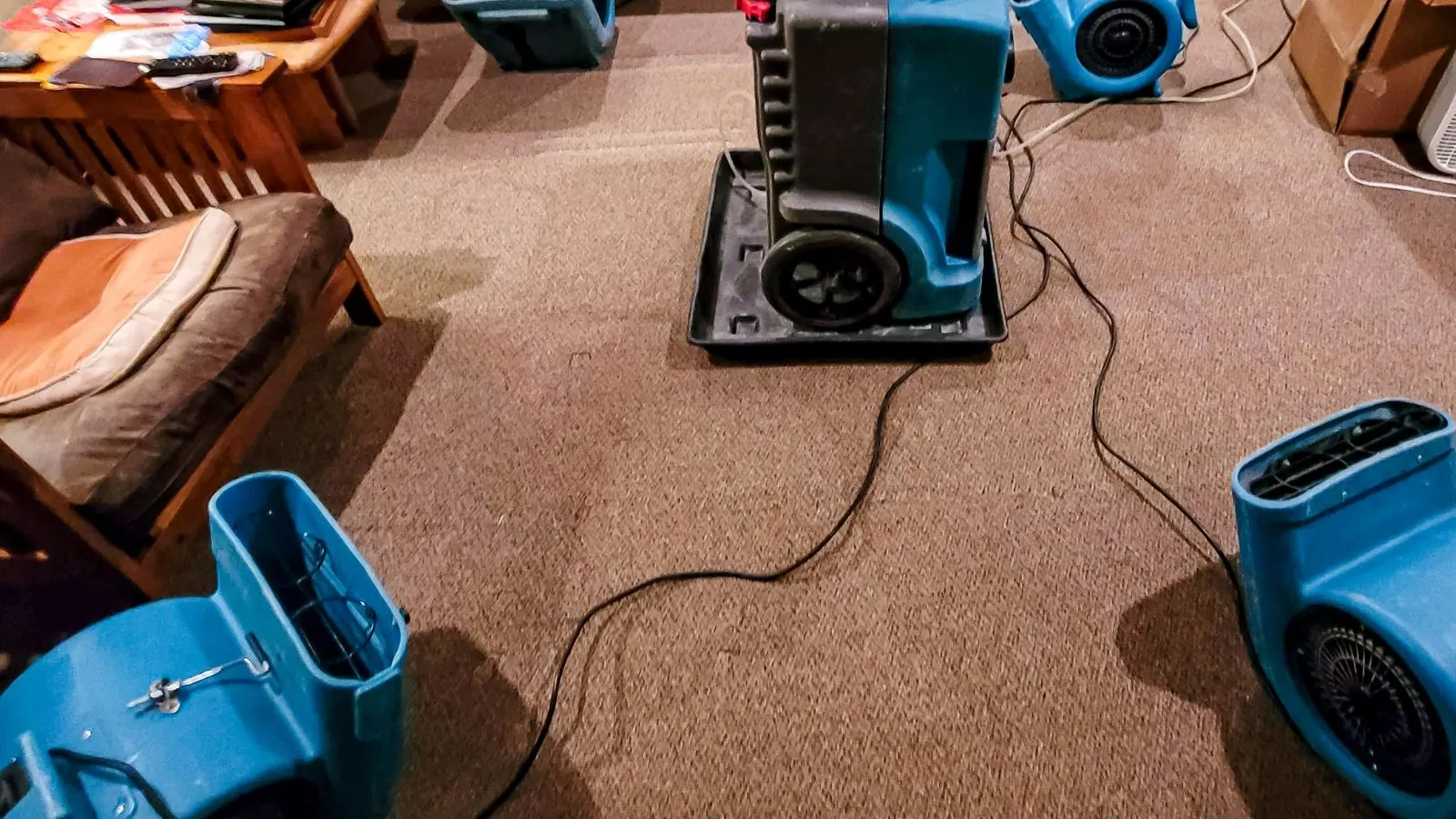
Equipment goes where the map says. Air movers are placed to direct airflow across walls and floors, and dehumidifiers run in the closed space. The room should stay closed during drying so the equipment controls the air.
The crew returns daily or on a set schedule, takes readings and adjusts equipment. When a surface reaches its goal, equipment moves to areas still wet.
How Long Does It Take?
Many jobs take several days, though the readings decide, and not a calendar. Thick materials such as framing and concrete dry slowly, and a large loss or a high humidity day can extend the timeline. We will not promise a fixed number of days before seeing the structure.
What You Can Do While Equipment Runs
- Keep the room closed and do not move or turn off equipment.
- Expect noise and some added heat, and plan for sleeping elsewhere in the house.
- Keep pets and children away from equipment and cords.
- Do not plug extra devices into circuits serving the equipment.
- Call if something stops working or looks different.
Step Five: Final Readings
At the end, the crew confirms the readings meet the drying goal, which is based on an unaffected area of the same material. You should receive the log for your records and for your insurer.
The equipment comes out, and repairs can begin. See water damage cleanup for finishing steps that come after drying.
Categories of Water
| Category | Typical source | What changes |
|---|---|---|
| Clean water | Broken supply line, appliance leak | Drying in place is often possible. |
| Gray water | Washing machine or dishwasher discharge | More removal of porous materials. |
| Black water | Sewage or floodwater | Protective gear, removal of porous materials and disinfection. |
Clean water can turn into worse water if it sits. That is another reason for starting quickly, since time and temperature change how safe wet materials are.
What We Need From You When You Call
- Where the water came from and whether it has stopped.
- Which rooms and floors are wet.
- Whether the water is clean, from a drain or from outside.
- Whether the power is on in the wet areas.
- Whether you rent, and who the property manager is.
Answers to these let dispatch tell the crew what to bring. We do not promise an arrival time, but accurate details help the team prepare.
Keeping Records for Your Insurer
Ask for the moisture map, the equipment log and the daily readings. These documents show what was wet, how drying progressed and when the goal was reached, and they are the same records an insurer is likely to request.
When Walls and Floors Need to Be Opened
Sometimes the only way to dry a cavity is to open it. Crews may cut small holes at the base of a wall, remove baseboards or lift a section of flooring. These openings let air reach hidden moisture, and they are repaired later as part of the rebuild.
Odor and Air Quality During Drying
Some odor is normal while wet materials dry, and HEPA air scrubbers help when dust or particles are a concern. If the smell grows stronger or turns sour after a few days, tell the crew, because it can mean a pocket of moisture that has not yet been reached.
Ask who your daily contact will be and how to reach the crew outside visit hours. Clear communication keeps the schedule on track and gives you a way to report anything unusual.
Bellflower Local Note: Knowing Your Shutoff
Bellflower is served by four water companies, so the first step in any extraction job is shutting off the right supply. The house shutoff valve is the quickest route. If it will not close, call the water company that serves your address, which may be California American Water, Liberty Utilities or one of the two mutual companies.
Cerritos has its own Water Division at (562) 407-2674 with an after-hours line at (562) 860-4018, and Lakewood residents east of the San Gabriel River are served by Golden State Water. Find your provider before an emergency in Cerritos, Lakewood or Bellflower.
Safety During Extraction
- If water is near outlets, appliances or a panel, stay out and leave the power off until it is checked.
- Shut off the water at the fixture or the main valve if you can reach it safely.
- Move people, pets and small valuables out of the wet area.
- Photograph the damage before anything is moved.
- Call 911 first for fire, gas odor or any risk to life.
Drying plans on this site follow the ANSI/IICRC S500 standard for professional water damage restoration, which sorts water into categories and sets how wet materials are handled. This describes the published industry standard and not a certification claim, and homeowners can ask any company which standard its crews work to.
Extraction and Drying FAQ
Walls and subfloors hold water deep inside, and it comes out slowly. Daily readings show when the structure reaches its goal.
Usually not. A closed room lets dehumidifiers work. Your crew will tell you if exceptions apply.
Running dryers and fans uses power. Ask the crew about the expected load and keep the information for your insurer.
Final readings match the drying goal and you receive the log.
Rarely for a real loss. Retail units do not pull water from wall cavities or subfloors.