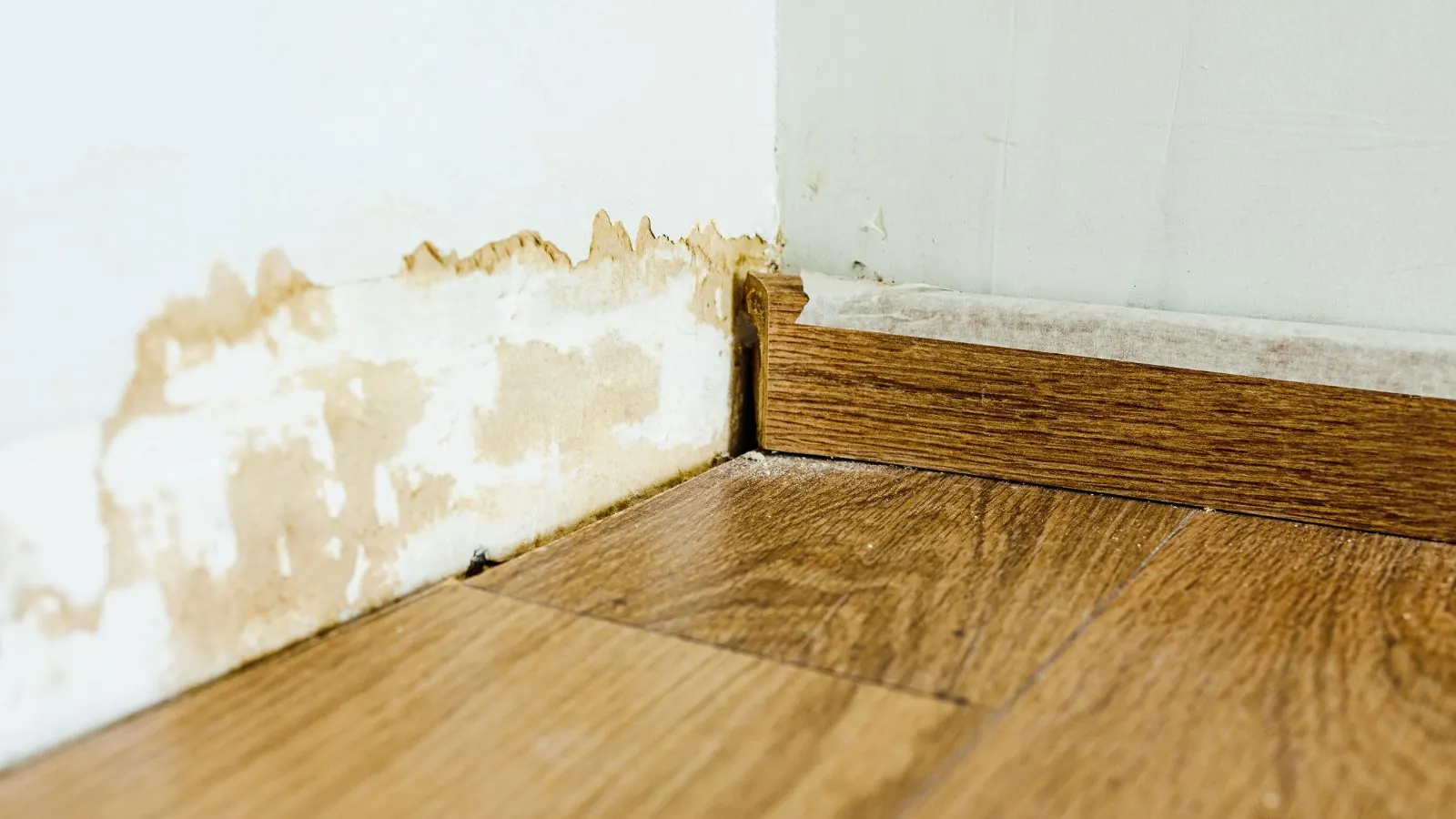
First, Is the Floor Truly Dry?
Everything depends on this. A floor that still holds moisture will keep moving, and refinishing it locks in mistakes. Ask for moisture readings that compare the damaged area with an unaffected part of the same floor.
The floor should also have time to settle. Boards continue to adjust for a while after drying, so a floor that looks flat on day three may look different two weeks later. If you wait to decide, you can make the call with real information.
| Condition after drying | Usual path |
|---|---|
| Flat, finish intact, light staining | Screen and recoat. |
| Flat, finish damaged, solid wood | Sand and refinish. |
| Mild cupping that has not flattened | Wait, then reassess, sanding may be possible. |
| Permanent warping or gaps | Replace affected boards. |
| Engineered floor with lifted layers | Replace affected boards or the room. |
| Black staining throughout the grain | Replace or sand deeply, based on the depth. |
How Much Wood Is Left to Sand
Solid hardwood has a wear layer above the tongue and groove. Each sanding removes some of it. If past refinishing used much of that layer, there may not be enough left to remove deep damage.
Engineered floors have a thin top veneer. Many can handle only a light sanding or none, depending on the thickness. A flooring contractor can measure at a vent or a removed board.
Staining and Discoloration
White haze in the finish often responds to light abrasion and a new coat. Gray or black marks in the wood fibers go deeper. Dark stains can come from tannins reacting with water and iron, or from growth.
Sanding can lift some stains, but not all. If the grain stays dark after sanding, replacing the boards may be the cleaner choice. A sample patch in a closet or under a rug can show the result before committing to the whole room.
Matching Boards
Replacing a few boards means matching species, width, thickness and color. New wood looks different from aged wood, and even a careful match can show until the whole floor is refinished. For that reason contractors often refinish the full room, or at least to a natural break such as a doorway.
Leftover boards from the original installation, if you have them, make the best match. Ask the previous owner or check a closet or garage.
- Get moisture readings before any sanding.
- Ask the contractor to measure remaining wear layer.
- Request a sample patch in a hidden area.
- Plan to refinish to a natural break such as a doorway.
- Keep documentation for your insurer.
Where This Fits in the Whole Job
Drying comes first under water mitigation, and the repair decisions come after under water damage repair. A floor that is sanded too early can crown, so the order matters.
Time and Disruption
Sanding and finishing takes several days when you include drying time between coats. Rooms have to be empty, and dust control is part of the job. Plan for furniture storage and for staying off the floor until the finish cures.
Replacement adds time for delivery and acclimation of the new wood. Ask the contractor for a schedule that accounts for both.
Cost Factors Without the Guesswork
Prices depend on the size of the room, the type of wood, how much is damaged and what finish you want. A screen and recoat costs less than a full sand, which costs less than replacing boards. We do not publish exact numbers because the size and condition of your floor decide them.
Get at least two written quotes from flooring contractors, and ask each what they assumed about moisture and wear layer. Quotes built on the same assumptions are easier to compare.
Finish Choices After Water Damage
- Oil-based finishes tend to be durable and warm in tone.
- Water-based finishes dry faster and stay clearer.
- Hardwax oils are easier to spot repair.
- Stain color can hide mild discoloration but not deep damage.
- Ask the contractor to match the sheen of the surrounding rooms.
Taking Care of the New Finish
Keep furniture off the floor for the period the contractor recommends, usually until the finish has cured. Use felt pads, wipe spills quickly and keep indoor humidity steady so the boards do not move. Those habits protect the repair and give it a chance to last.
Living Through the Work
Sanding makes dust and finishing makes fumes, so plan for ventilation and a place for pets and children. Cover vents, close doors and ask about dust containment. Water-based finishes tend to have less odor, which can matter if you cannot move out.
Warranty and Written Scope
Ask the contractor to put the scope, materials and finish in writing, and ask what is covered if boards move after the work. A written scope prevents arguments later and gives your insurer a clear document if a claim is involved. Keep a copy with your moisture readings.
If you plan to sell or rent the home soon, tell the contractor. Visible repairs affect disclosure and appearance, and a consistent finish across the room tends to read better to buyers and tenants than a patchwork.
Bellflower Local Note: Permits for Bigger Floor Jobs
The City of Bellflower's permit handout lists plumbing, water heater and electrical work, and does not mention flooring or drywall. If your project includes subfloor or structural work, call the city at (562) 804-1424, extension 2006, to confirm what applies.
Rules can differ by city. Norwalk's City Hall can be reached at (562) 929-5766 for questions in Norwalk, and the same is true in other nearby cities where you may own property.
Sand, Refinish or Replace FAQ
It depends on the thickness of the wear layer. A flooring professional can measure it for your floor.
Yes, ideally to a natural break such as a doorway so the change is not visible mid-room.
Light stains often sand out. Deep dark stains may remain, and replacement may look better.
Wait until readings are stable and the floor has settled. Your flooring contractor can set the timing.
The city handout does not address flooring. Ask the city before major work. Call (562) 804-1424, extension 2006.