Know What the Piece Is Made Of
| Material | Response | Outlook |
|---|---|---|
| Solid wood | Swells and then returns as it dries | Often recoverable. |
| Plywood | Can delaminate at edges | Mixed, depends on glue and exposure. |
| Veneer over particleboard | Core swells, veneer lifts | Usually not recoverable. |
| MDF | Swells and crumbles | Usually replaced. |
| Laminate on particleboard | Edges bubble and peel | Usually replaced. |
Check the back or an interior edge. If you see pressed fiber or chips, it is particleboard. If you see layers, it is plywood. If you see grain, it is solid wood.
First Steps for Wet Furniture
- Move pieces out of standing water and onto foil or plastic blocks.
- Remove drawers and doors so air reaches the insides.
- Wipe surface water and lift cushions and fabrics off wood.
- Move pieces to a dry, ventilated room but away from direct heat.
- Photograph everything before you start drying or discarding.
Fast action matters. Water wicks up legs and into joints, and moisture trapped in a drawer bottom can keep a piece damp for weeks.
Kitchen and Bath Cabinets
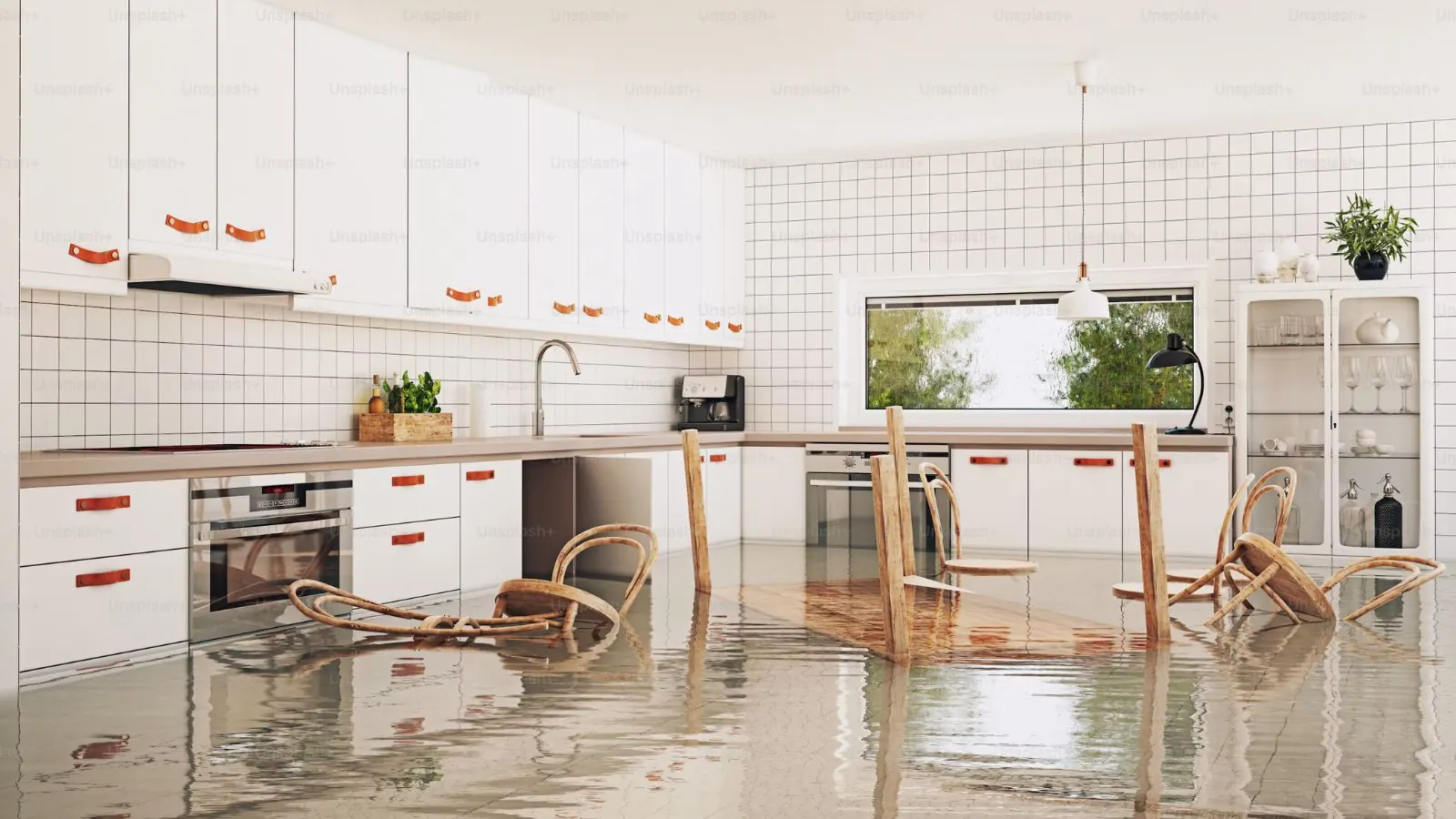
Cabinets are the hardest case because they sit against walls and floors where water collects. The base is most exposed, and the toe kick, the bottom panel and the sides often swell first. Cabinet boxes made of particleboard rarely recover from standing water.
Crews often remove the toe kick to dry behind and under the boxes. If the boxes are sound, they may be left in place, but if the bottoms have swollen, replacing them can cost less than repair in the long run. A cabinet installer can advise on matching the existing line.
Antiques and Valued Pieces
Pieces with sentimental or collector value deserve a conservator or furniture restorer before anyone tries to refinish. Finishing steps that suit a modern table can harm an old shellac or veneer. Keep the piece stable, photograph it and call a specialist.
Restoration crews can move contents out and store them dry. We can also help document the loss for an insurer, but we do not restore antiques ourselves.
Drying Without Making It Worse
- Slow, even drying beats fast drying, since wood cracks when it dries too fast.
- Keep pieces out of direct sun and heater airflow.
- Use gentle airflow and a dehumidifier in the room.
- Re-check joints and drawers after a few days.
- Wait until the wood stabilizes before sanding or refinishing.
Refinish, Repair or Replace
If a solid piece is dry, sound and only marked on the surface, refinishing may bring it back. If joints have loosened, a furniture repair shop can reglue them. If the core has swollen or crumbled, replacement is the realistic answer.
Costs vary by size, material and finish, so we do not post figures. Get a written opinion from a cabinet or furniture professional before deciding. When the room itself was soaked, water damage repair covers the walls and floors around the pieces.
Pack-Out and Storage of Contents
When a room needs full drying, furniture may be moved out so crews can reach walls and floors. Packing and storing contents protects them from further damage and from the equipment. Items that are wet are handled first, and dry items are boxed and labeled.
Keep a simple inventory with photos before anything moves. A list by room helps you find things later and supports an insurance claim for any pieces that cannot be saved.
Cleaning Wood Surfaces After a Wetting
- Wipe with a soft cloth and mild soap, then dry right away.
- Avoid soaking the wood or using steam.
- Do not use heat guns or hair dryers on finished surfaces.
- Leave white haze or cloudy finish alone until the wood is fully dry, since it may clear.
- Test any cleaner on a hidden area first.
These steps are for light wetting. If a piece has stood in water, it needs a closer look from a furniture professional before you try more.
Hardware and Hinges
Metal hinges, pulls and drawer slides can rust after a wetting. Remove them if you can, dry them and replace any that corrode. Rusty hardware can stain wood and stop doors from closing properly.
Countertops, Backsplashes and Seams
Water often enters cabinets from above, through failed seams at sinks and backsplashes. Check caulk lines and the edge of a laminate counter, since lifted edges let water seep into the core below. Resealing a seam is cheap and stops the next round of damage.
When to Call a Cabinetmaker
If the boxes are sound but doors, drawer fronts or panels are warped, a cabinetmaker can often replace those parts and leave the rest. That can keep a kitchen consistent without a full remodel, and it is a good question to ask before agreeing to tear out everything.
Insurance and Contents Lists
Furniture and cabinet losses often fall under contents or dwelling coverage depending on whether the item is built in. Ask your insurer which category applies, and keep photos, purchase dates and any receipts so the pieces can be listed with their approximate age and condition.
Bellflower Local Note: When a Utility Shutoff Matters
Four water companies serve Bellflower, including California American Water, which acquired the former municipal system on November 3, 2022. If a supply line behind a kitchen cabinet fails, knowing which company owns your meter tells you who to call if the house shutoff will not close.
For general city questions, Public Works through City Hall can be reached at (562) 804-1424. Residents of Paramount and Cerritos have city-run utilities, so the call is different there.
Cabinet and Furniture FAQ
Solid wood may. Particleboard and MDF usually do not, and they often crumble if disturbed.
Yes. Airflow into the cabinet shortens drying time and shows where water collected.
If it is solid wood, dry and sound, often yes. If it is veneer over particleboard, usually not.
Swelling alone is not mold, but damp particleboard can grow it. Have a crew check moisture and look behind the toe kick.
No. We dry the structure and help document losses. For restoration or refinishing, use a furniture specialist.