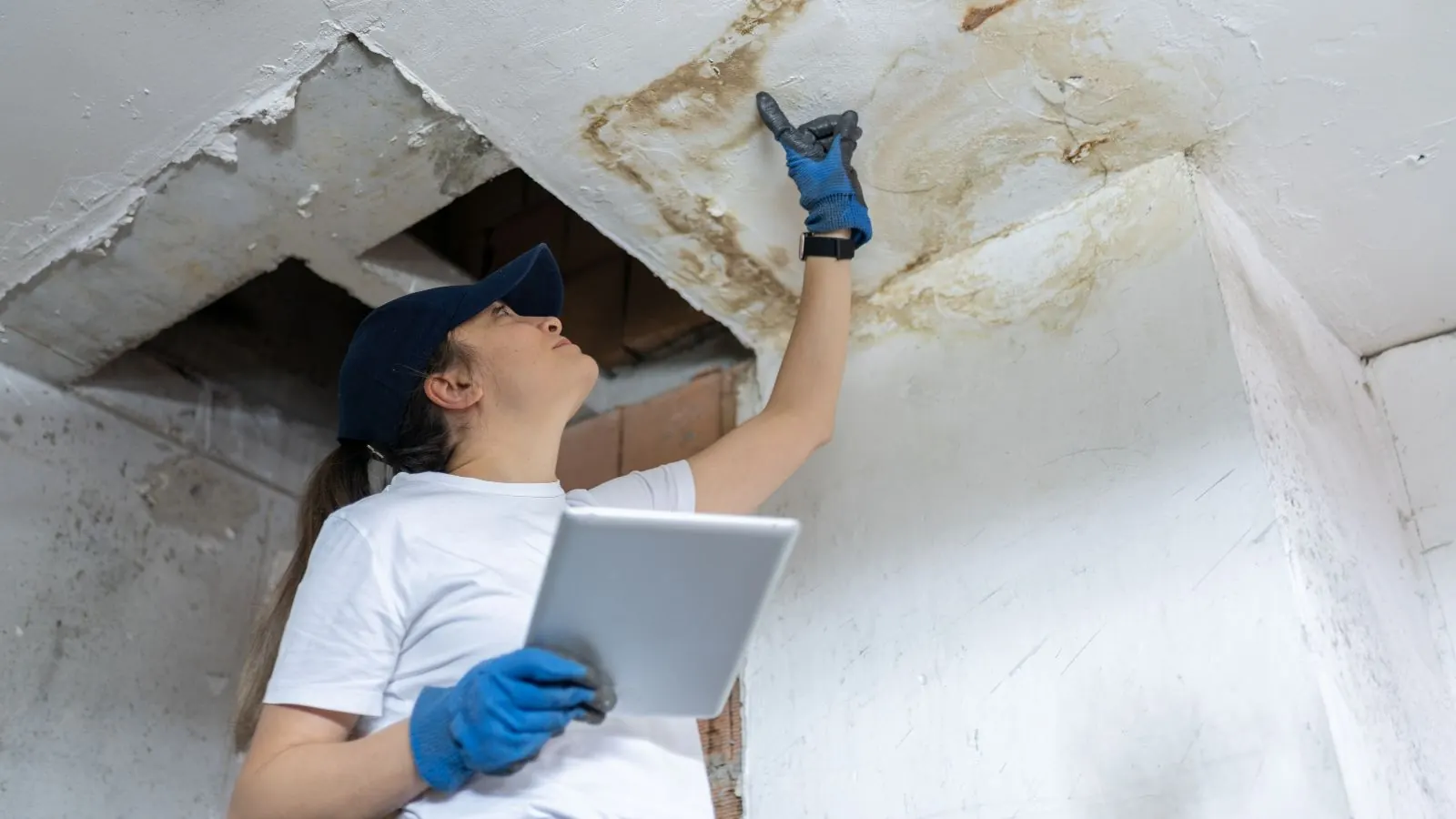
What an Adjuster Does
The adjuster works for your insurer, reviews the cause and extent of the damage and estimates the cost to repair it. The visit may be in person, by video or based on photos, depending on the loss.
The adjuster's job is to decide coverage and cost under your policy. You are entitled to ask questions, and a clear record of what happened makes the answers faster.
Before the Visit
- Stop the water and protect what you can, because most policies expect reasonable steps to prevent more damage.
- Photograph and film every damaged room, item and the source of the leak.
- Keep damaged materials until the adjuster has seen them or approved disposal, unless they are unsafe or contaminated.
- Make a list of damaged items with age, price and photos.
- Ask your insurer which mitigation steps they want done and by whom.
Fast drying counts as a reasonable step. Water mitigation documents moisture readings, which are exactly the data that shows how far the water went.
| Document | Why it helps |
|---|---|
| Dated photos and video | Show the damage before cleanup. |
| Moisture readings and drying logs | Show which materials were wet and how drying progressed. |
| Written scope of work | Lists what must be removed, dried and rebuilt. |
| Receipts for emergency costs | Support reimbursement of reasonable expenses. |
| Inventory of damaged contents | Supports the contents part of the claim. |
During the Visit
Walk the adjuster through the source, the path of the water and each room. Point out damage that is not obvious, such as a wall that is wet behind the paint. Share the moisture readings and the scope from the restoration crew.
Ask what is covered, what is excluded and what the next steps and timelines are, and write down the answers. If a statement surprises you, ask for it in writing.
Large Losses and Disagreements
Large losses may involve multiple adjusters and a longer review. Mitigation should not wait for approval, since waiting lets damage grow. Disagreements about scope or price are common, and a detailed written scope and readings help both sides resolve them.
Some policyholders hire a public adjuster to represent them. That is a choice with its own fees, and you should read the contract carefully. We do not provide adjusting services, and we do not promise any claim outcome.
Flood is a separate question
Standard homeowners policies generally exclude flood, according to the California Department of Insurance. Flood coverage is bought separately, typically through the National Flood Insurance Program, and a new policy usually takes effect 30 days after purchase. Ask your insurer before a storm, not after.
Mistakes That Slow a Claim Down
The most common is waiting. A homeowner hopes the damage will dry on its own, and weeks later a hidden problem shows up. Insurers expect you to limit the damage, so delay can be argued against you.
The second is unclear records. Photos without dates, a list of items with no prices and handwritten notes are all harder to review than organized files. A single folder on your phone or computer is enough.
Talking With the Adjuster
- Stick to facts about when the water started and what you did.
- Do not guess about cause if you do not know. Say that you are not sure.
- Ask the adjuster to put coverage decisions and next steps in writing.
- Keep a log of every call, with date, time and name.
- Take your time before signing any release or final payment form.
Mitigation and the Estimate Are Different Jobs
Emergency mitigation stops the damage from growing. It includes extraction, removal of wet materials and drying. The repair estimate covers rebuilding, such as drywall, paint and flooring. Insurers often handle these as separate parts of a claim, with the first starting right away.
Because the scope can change as drying reveals more, ask for updates in writing. A supplement to a claim is routine when hidden damage is found, and the moisture log supports it.
After the Estimate Arrives
Read the estimate line by line and compare it with your restoration scope. If an item is missing, send the insurer the readings or photos that support it. Ask for the policy section behind any denied item.
Repairs should not start until you know what the insurer will pay for, but mitigation should never wait. Keep your contractor, your insurer and your own notes in step so nobody works from an old scope.
Keeping Your Own Timeline
Write down the date you found the damage, the date you reported it, the date drying began and the dates of every call. A simple timeline answers most questions an adjuster raises about delay, and it helps if the claim needs a second review. Add photos with their timestamps and the names of everyone who visited.
Bellflower Local Note: Where to Get Claim Help in California
The California Department of Insurance offers consumer help for people with claim questions or complaints, and its website has a Getting Help section. If your insurer is slow or you disagree with a decision, that is the public agency to contact.
Homeowners in nearby cities face the same process. Norwalk had 64.6 percent owner-occupied housing in 2020 and Cerritos had 76.4 percent, versus 39.2 percent in Bellflower, so adjuster visits for owners are more common there. The steps above apply in Norwalk, Cerritos and Bellflower alike.
Adjuster FAQ
No. Mitigation should start promptly to limit the damage. Document first, then dry, and keep records.
Ask your insurer first and take photos and samples. Contaminated materials should be removed for safety.
We provide readings, photos and a written scope you can share. The claim decision remains between you and your insurer.
The California Department of Insurance has consumer help for claim questions and complaints. Start on its Getting Help page.
The insurer reviews the scope and price under your policy. Ask for the reasons behind any adjustments.
After the scope is agreed, water damage cleanup and repairs follow in order.