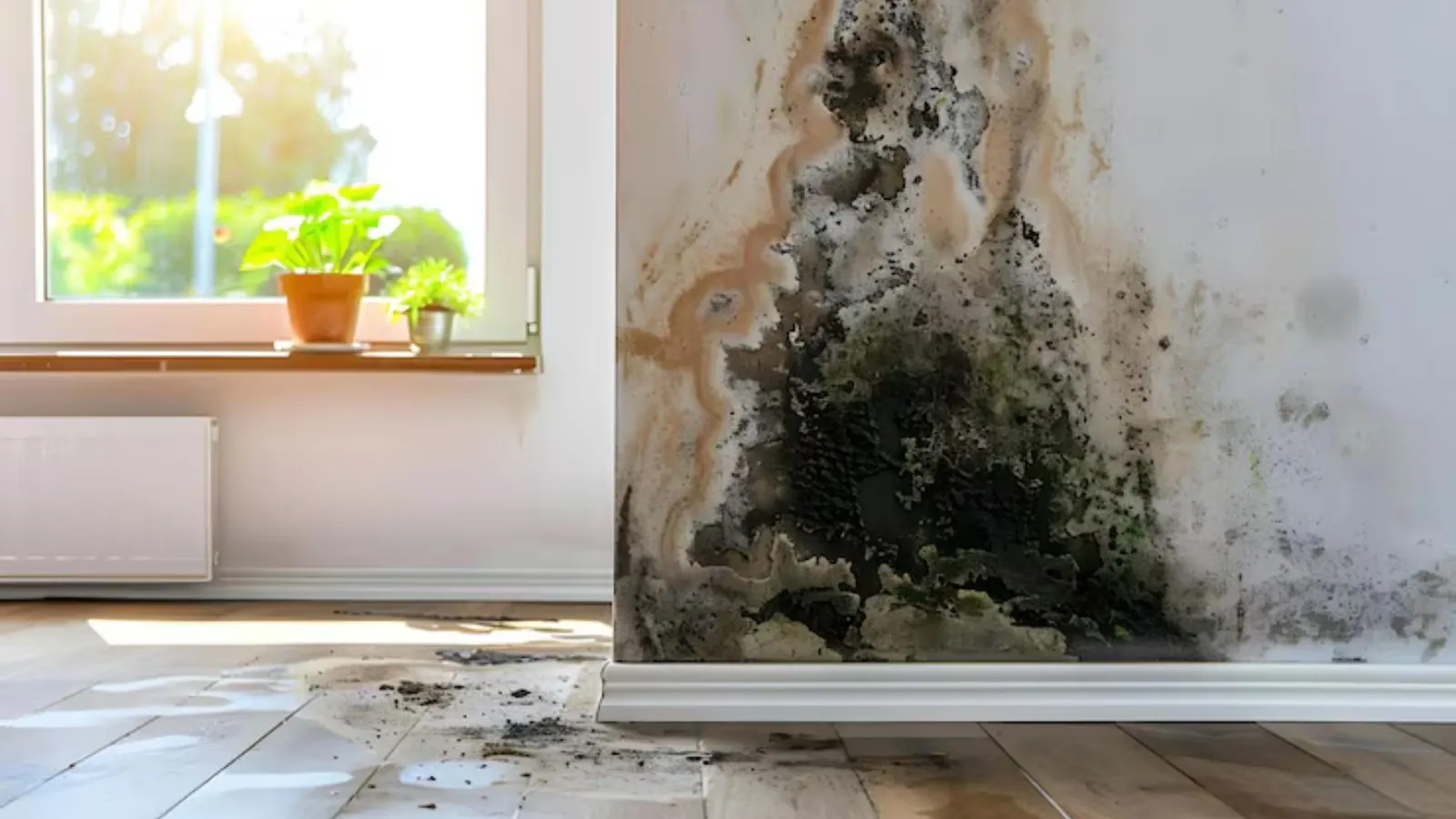
Why Water and Mold Go Together
Mold is common indoors and outdoors, and it grows when moisture stays on a surface it can digest. Wet drywall paper, carpet pad, wood, insulation and ceiling tile are all easy to feed on. A leak that gets dried promptly rarely gives mold a chance, and one that sits behind a wall often does.
This is why restoration crews measure moisture instead of relying on what a surface feels like. A wall can feel dry on the surface and still hold water in the cavity behind it.
| Material | Holds moisture? | Usual action |
|---|---|---|
| Carpet pad | Yes, for a long time | Removed and replaced. |
| Drywall | Yes, wicks upward | Dried if sound, cut out if swollen or stained. |
| Wood framing | Slowly releases | Dried with airflow, checked with a meter. |
| Fiberglass insulation | Yes in a cavity | Often removed if wet. |
| Concrete slab | Slowly releases | Dried and monitored. |
Signs the Water Is Still There
A musty smell, paint that bubbles or peels again after it was dried, baseboards that swell and a cold or clammy wall are all clues that moisture remains. Dark spots appear later and are not the first sign.
If you are not sure, a moisture meter and a thermal camera sweep can find wet areas behind surfaces. That is the first step of water mitigation, and it costs far less than guessing and being wrong.
What to Do After a Leak
- Stop the water at the source.
- Remove standing water and wet porous items such as rugs and cushions.
- Open windows when the weather allows and run fans toward the wet area.
- Call a restoration crew if walls, ceilings or flooring got wet.
- Document everything for your insurer.
Dehumidifiers help in a closed room, but a retail unit does not replace the extraction and drying a crew does, because wall cavities need airflow that a single fan cannot give.
Testing and When It Becomes Remediation
If growth has started, the job changes from drying to remediation. Containment keeps spores from spreading, affected porous materials are removed and surfaces are cleaned. The process follows the ANSI/IICRC S520 standard, and homeowners should ask any company whether its crews work to it.
Testing can help identify what is present and, after the work, confirm the area is clear. Ask who performs the test and whether it is independent of the company doing the removal. Questions about health go to a physician, not to a contractor.
The fix comes before the cleanup
Cleaning mold off a wall without fixing the leak behind it only buys a few weeks. A plumber or other trade fixes the source, restoration dries the building and remediation removes what grew. Mold remediation details the steps.
How Restoration Crews Decide What Stays and What Goes
The decision comes down to two questions: is the material porous, and was it wet for long enough to hold water deep inside. Porous materials such as carpet pad, ceiling tile and insulation are replaced far more often than solid ones. Framing and concrete are usually dried and kept.
Drywall sits in the middle. A clean wall that was wet briefly may dry in place, but a wall that has swollen, crumbled or developed staining is typically cut out. Crews record readings before and after, so you can see the evidence behind each choice.
Dehumidification and Airflow
Drying works by moving wet air out and replacing it with dry air. Air movers push air across surfaces, and dehumidifiers pull moisture out of the room so it cannot settle back into the structure. The balance matters, because too much airflow with no dehumidifier only moves humidity around.
Windows are usually kept closed during active drying so the equipment can control the room. That surprises many homeowners, but it is how the drying goal is reached on a predictable schedule.
Questions to Ask a Restoration Company
- Do you measure moisture and share the readings with me?
- Do your crews follow ANSI/IICRC standards for water and mold work?
- Who removes materials, and who disposes of them?
- What happens if drying readings do not reach the goal?
- Will I receive a written scope I can share with my insurer?
Hidden Water: Where to Look
Water that leaks inside a wall or under a floor can spread a long way from the source. Check the back of cabinets, the base of walls on the other side of a bathroom and the ceiling under any upstairs bath. Look at window sills too, since a roof or window leak can feed water down a wall.
If you find one wet spot, assume there may be more. A thermal camera and meter sweep of adjoining rooms costs little compared with opening the wrong wall.
Bellflower Local Note: Dry Summers Do Not Protect Indoors
NOAA's 1991 to 2020 normals for Long Beach Daugherty Field show about 12 inches of rain a year, with roughly 10.5 falling between November and March and only 0.01 inch in August. Dry weather outdoors tells you nothing about a wet wall indoors.
A water heater, a supply line or an air conditioner condensate line can leak in any month, and the most common first sign is a ceiling or closet stain. Nearby towns follow the same pattern, so a leak in Lakewood or Norwalk is treated the same way.
Water Damage and Mold FAQ
It depends on the material, the moisture and the temperature, so there is no single number. The safe approach is to start drying right away and verify with moisture readings.
Health questions belong with a physician. What a restoration company can do is find the moisture, dry the structure and remove growth safely.
Surface cleaning does not remove growth inside porous material and does not fix the moisture source. Damaged drywall is usually cut out.
No. Indoor leaks supply their own moisture. Outdoor dryness in summer does not dry a wall cavity that holds water from a supply line leak.
Mold coverage varies and is often limited. Check your policy or ask your insurer, and document the source of the water.