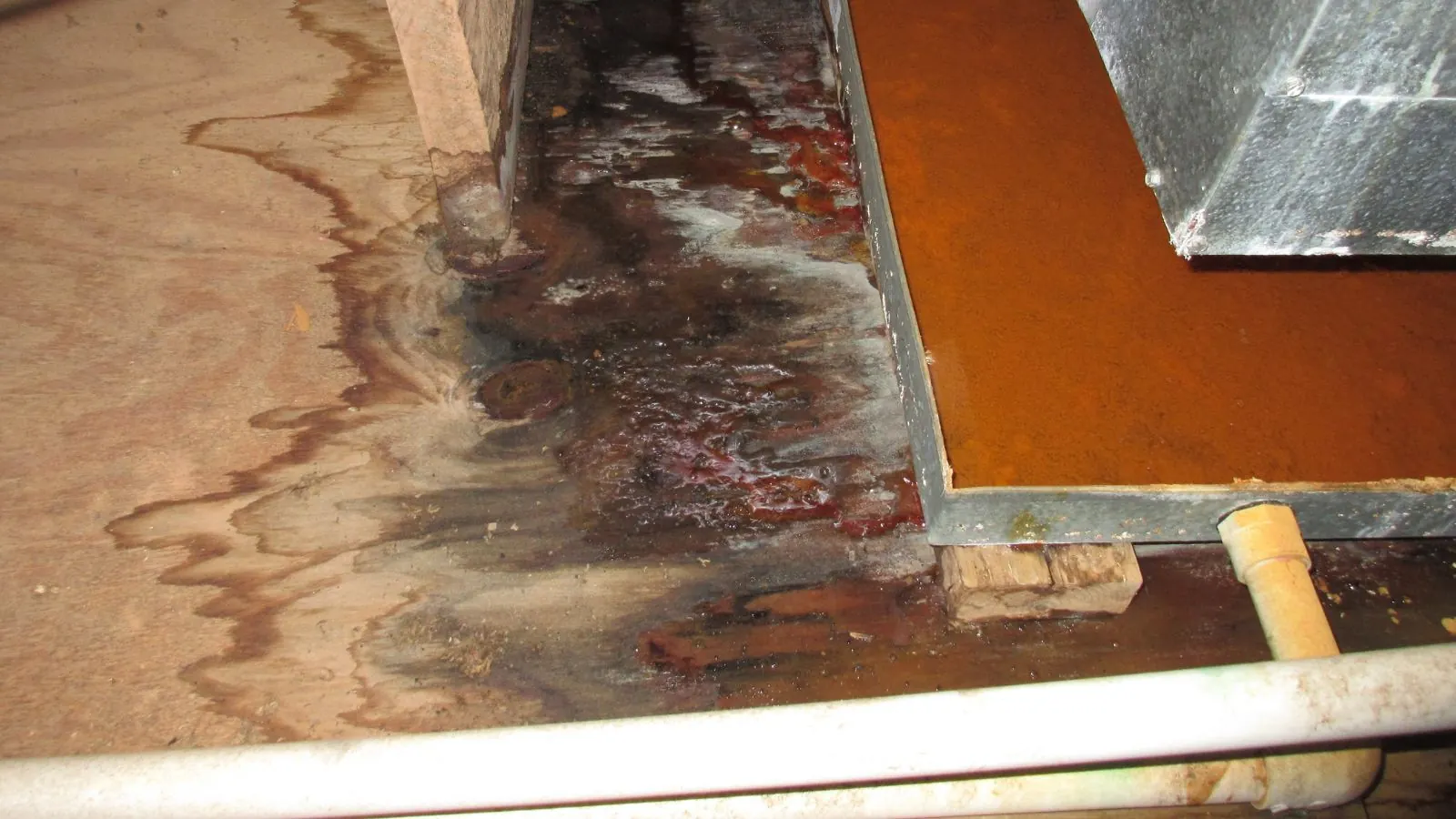
Three Kinds of Wood, Three Outcomes
| Wood | Typical result | Common action |
|---|---|---|
| Baseboards and trim | Swelling, paint peeling, gaps | Removed, dried behind, replaced and repainted. |
| Wall studs and plates | Wet but usually sound | Dried and checked, replaced if soft. |
| Plywood subfloor | Swells or delaminates | Dried if solid, cut out if layers separate. |
| Particleboard underlayment | Crumbles when wet | Usually replaced. |
This guide is about wood inside the structure. Finished floors, cabinets and furniture raise different questions, and water damage repair covers how the rebuild is planned.
Testing Wood for Soundness
A moisture meter shows how wet the wood is, and the next question is whether it is still strong. Crews press a screwdriver or awl into framing. Wood that resists and splinters is sound, while wood that sinks in or crumbles is not.
Color and smell help too. Dark staining in the grain, a sour odor and soft fibers all suggest long exposure. Surface stains from a brief wetting do not necessarily mean structural damage.
Trim and Baseboards
Trim swells first because it is thin and has exposed ends. Paint cracks and the joints open. The usual fix is to remove it, dry the wall and floor edge behind it and install new trim.
Taking trim off also lets crews see the bottom of the wall. Water often hides there, and drywall can wick moisture several inches above the visible wet line.
Framing in the Wall
Studs and plates are thick and take a long time to take on or release water. After a short event they usually dry with airflow once the drywall is opened or small holes are drilled. After a long event they can show staining or softness and may need reinforcement or replacement.
Repairs that sister a new stud beside a damaged one are common, but anything structural should be reviewed by a licensed contractor or engineer as needed. We handle drying and cleanup and tell you when another trade must evaluate.
Subfloor Under Flooring
Subfloor holds the house floor up and lies under carpet, tile and wood. Plywood tolerates wetting better than particleboard, but both can delaminate if they stay wet. A soft or bouncy spot is a warning sign.
Crews may cut out a section and install new subfloor lapping onto the joists. Dry readings are taken before the new floor goes down, because covering damp subfloor invites mold and floor failure.
- Photograph wood before removal.
- Mark where wet readings stop so cuts do not go further than necessary.
- Let framing reach its drying goal before closing the wall.
- Treat any suspect wood for growth before covering it.
- Keep a record of what was replaced for your insurer.
After the Wood Is Dry
Once readings reach the goal, the wall is rebuilt, trim is installed and finishes are restored. If growth was found on the wood, mold remediation comes before closing it up.
What Not to Do
- Do not paint over wet or stained wood.
- Do not cover damp framing with new drywall.
- Do not use heaters to rush drying.
- Do not cut into load-bearing framing without guidance.
Doors, Jambs and Window Frames
Door jambs and window frames sit at the edge of walls where water tends to run. Jambs swell, doors stick and paint blisters around the frame. Often the wood can be dried, but swollen finish carpentry that no longer fits may need replacing.
Check the bottom of door casings and the sill of a window after a leak. Those spots collect water and can hide rot behind the paint.
Rot, Decay and Wood Insects
Wood that stays wet for a long time can develop decay, and damp wood can attract pests. Signs include crumbling, a sour smell, mushroom-like growth and fine dust or tunnels in the grain. These are findings that call for a contractor or pest professional.
A drying crew can flag suspect areas and photograph them, but repair of decayed structural wood is a carpentry job. Ask for the findings in writing so the right trade can follow up.
Fasteners, Glue and Finish
When replacing wood, use materials suited to the location. Moisture-resistant products make sense at the base of walls, near plumbing fixtures and in baths. Prime and seal cut ends before painting, since raw end grain is where swelling begins.
Working Around Plumbing and Wiring
Walls hide pipes and wires, so cutting must be done carefully. Crews check where utilities run before opening a wall and shut off power to wet areas. If wiring got wet, an electrician should check it before power is restored.
Budget and Sequence
Repairs happen in a set order: dry, remove, treat, rebuild and finish. Skipping ahead creates callbacks, such as paint that peels over damp wood. Ask for a sequence in writing and agree on what will be checked before each stage so you know when the structure is ready for closing up.
Bellflower Local Note: Older Homes, Older Wood
The city's draft housing element reports that about 82.7 percent of Bellflower's housing stock was built before 1970. That means a lot of the lumber inside local walls and floors has been there for decades, and old plumbing and old roofs have had a long time to leak.
Older wood is often dense and dries well, but old finishes and old paint need care. In Lakewood, where about 17,500 houses went up in under three years starting in 1950, many homes share similar framing, so what we learn on one street helps on the next.
Water-Damaged Wood FAQ
Often yes. Sound framing dries with airflow, and crews check it with a meter and probe before closing the wall.
Soft spots, bounce, visible swelling and a musty smell are warning signs. A moisture meter and probe confirm it.
The city handout does not address this work. Call Bellflower at (562) 804-1424, extension 2006, before starting.
Old growth wood is often denser, but condition matters more than age. Test it instead of assuming.
No. Paint does not strengthen softened wood or stop moisture. Replace what is not sound.