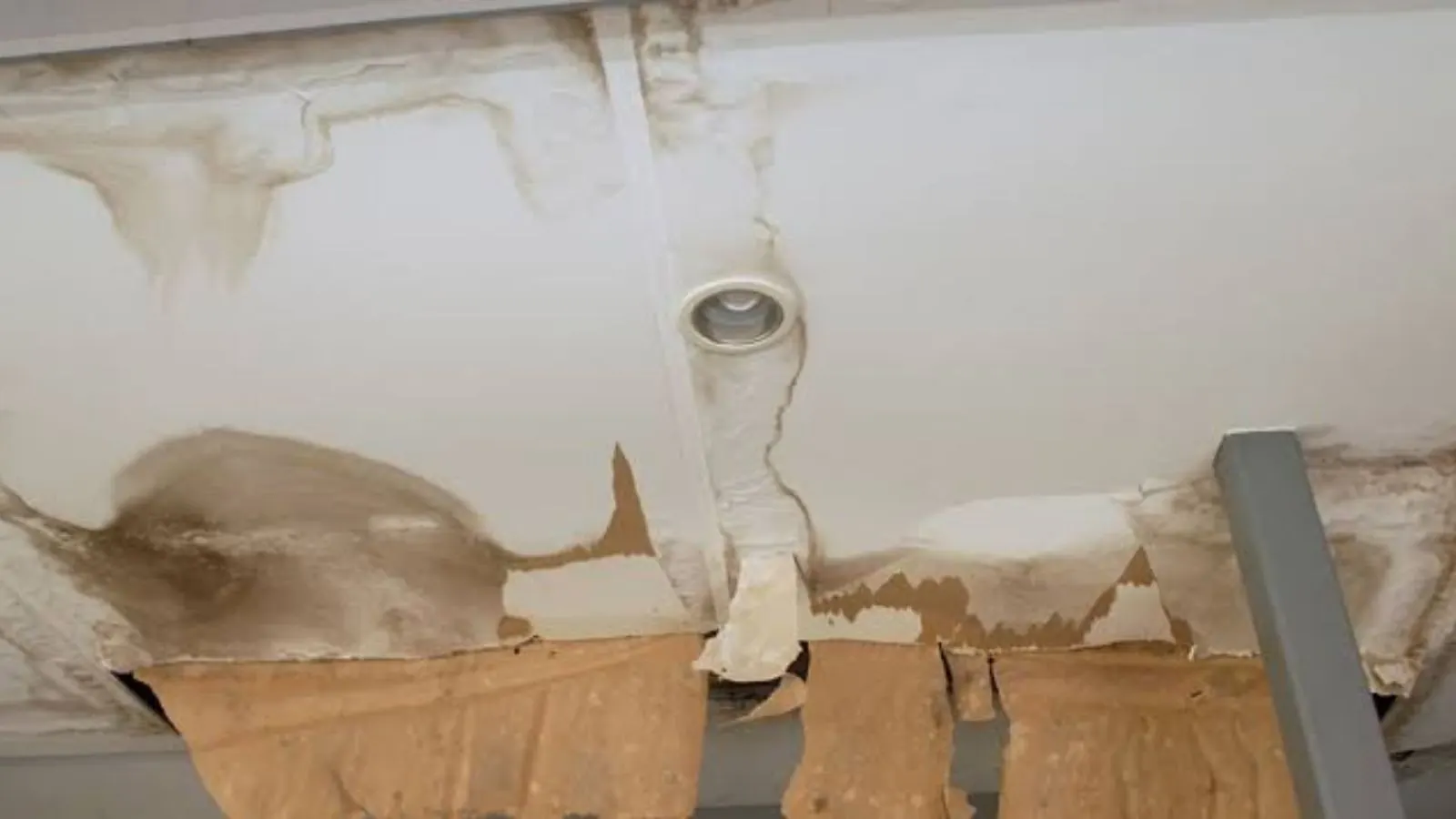
How an AC Leak Starts
Water collects on the evaporator coil, drips into a pan and flows out through a drain line. Algae, dust and debris can clog the line, and when it backs up the pan overflows. Some systems have a float switch that shuts the unit off, and a switch that fails or is missing lets water spill.
The leak is slow at first. A closet wall or an attic ceiling can stay damp for weeks before a brown stain shows below. By then insulation and drywall are often wet through.
| Symptom | Likely cause | Who handles it |
|---|---|---|
| Water around the indoor unit | Clogged condensate line or full pan | HVAC technician. |
| Stain on a ceiling below the air handler | Overflow soaked insulation and drywall | HVAC technician, then restoration. |
| Damp closet wall near the unit | Slow leak behind the wall | Restoration for drying, HVAC for the source. |
| Musty smell near vents | Moisture in ducts or the pan | HVAC technician, with moisture check. |
What to Do Right Away
- Turn off the air conditioner at the thermostat and the breaker, so it stops making more water.
- Place towels and a bucket under visible drips and move belongings away.
- Do not poke a sagging ceiling, since it may be holding water.
- Photograph the stain, the unit and the pan.
- Call an HVAC technician to clear the line and a restoration crew to dry what got wet.
Drying and Repair
The first job is a moisture sweep. A meter and thermal camera trace the water through the ceiling, the wall cavity and any insulation. Wet insulation is usually removed, and wet drywall is opened or replaced. Air movers and dehumidifiers dry the framing.
After readings reach the drying goal, water damage repair replaces drywall, repaints and restores the ceiling. If the damage has been there for weeks, check for growth before closing the cavity, since water mitigation and a moisture check should come first.
Whose problem is the AC line?
In a house, the owner pays for the HVAC fix and the repairs. In an apartment, the manager or owner handles the system and the building, while a renters policy may respond to your belongings. Report the leak in writing and keep photos with dates.
Preventing a Repeat
- Have the condensate line flushed or cleared during routine HVAC service.
- Ask a technician about a float switch or a secondary pan with a shut-off.
- Check the pan and line after a heavy cooling season.
- Watch for a musty smell and small stains near the unit.
Attic and Closet Air Handlers
Many homes in the area have the air handler in an attic or a hall closet. In an attic, an overflowing pan drips onto insulation and the ceiling below, often far from the unit itself. In a closet, water runs along the floor and into the wall and flooring.
Either way, the stain you see is not always under the unit. Water follows framing, so the visible spot can be several feet from the source.
What a Moisture Check Finds
- Wet insulation above the ceiling that still holds water.
- Drywall that looks fine but reads wet near the fasteners.
- Framing or subfloor that stayed damp for weeks.
- A wet closet floor that has wicked into the wall base.
- The edge of the damage, so removal does not go further than needed.
Cost and Timing of Repairs
The price of repairs depends on how much ceiling, wall or floor is involved and what finishes have to match. We do not publish exact figures because they would be guesses, and the scope on site decides the number.
Drying usually comes first, then removal of damaged drywall and insulation, then rebuilding and paint. Having the HVAC repair done at the same time prevents a repeat leak in the new finish.
Keeping a Record for Your Insurer
Photograph the pan, the line and the stain before cleanup, and keep the HVAC invoice that names the cause. Those two records show what happened and when, and they help whoever reviews the claim decide whether the leak was sudden or gradual.
Signs Your Condensate System Needs Service
- Water in the secondary pan or around the air handler.
- A unit that shuts off on its own in warm weather.
- Gurgling or a slow drain at the outdoor line outlet.
- Slimy buildup around the drain opening.
Any of these is worth a service visit before the cooling season ramps up, because the cost of a cleared line is small beside a wet ceiling.
Ceilings That Sag
A ceiling that bows or has a bubble in the paint is holding water. Do not puncture it in a spot over furniture, and keep people out from under it. A crew can release the water in a controlled way with a small opening over a bucket, which prevents a sudden collapse of wet drywall.
After the water is out, the board is usually replaced, since gypsum that has sagged rarely returns to flat.
Bellflower Local Note: Multi-Unit Buildings and Shared Ceilings
The city's draft sixth-cycle housing element says nearly half of Bellflower's housing stock is single-family detached, so the rest is multi-unit. In an apartment building, an AC closet on an upper floor can drain into the ceiling of the unit below.
In that case the manager should be told in writing, and the neighbor below should be informed as well. The same applies in Lakewood and Norwalk, where residential buildings range from single-story homes to apartment blocks.
AC Leak FAQ
Some people use a wet-dry vacuum at the line outlet, but a technician can find the cause and install a safety switch. Turn the system off first.
It depends on whether the leak was sudden or gradual, and on your policy. Check your policy or ask your insurer.
It depends on your lease and the policies involved. Tell the manager in writing, document the damage, and contact your insurer about your belongings.
It can if the cavity was not dried. Stain-blocking primer comes after readings reach the goal.
It can if materials stay wet. Dry quickly and check for hidden moisture. See mold remediation if growth has started.